Free Docker Run Command to Docker Compose Converter— gemini-3.0-flash
gemini-3.0-flashInstantly convert Docker run CLI commands to Docker Compose YAML configuration files. A fast, secure, browser-based tool for developers and DevOps engineers.
AI Generation Prompt
Docker Run to Docker Compose Converter Specification
Overview
A high-performance, single-file browser application that translates complex docker run command-line strings into standardized docker-compose.yml file content. This tool is built for developers who need to quickly modernize their container deployment workflow without relying on external APIs or server-side processing.
Technical Implementation Constraints
- Architecture: Pure Vanilla JavaScript, HTML5, and CSS3. Absolutely no build tools, frameworks (React/Vue/Angular), or persistent storage APIs (localStorage, IndexedDB).
- Sandboxing: Must function perfectly inside a sandboxed iframe. No
alert(),prompt(), orconfirm()—use custom CSS modals. - State Management: All data held in application state objects. State clears on refresh.
- Dependencies: Use CDNs for Tailwind CSS and an icon library (e.g., Heroicons) for a professional UI.
UI/UX Design
- Aesthetic: Modern, light-mode SaaS style. Crisp whitespace, subtle drop shadows, and a clean, monospace font for code blocks.
- Palette:
- Primary:
#2563eb(Blue) - Background:
#f8fafc(Slate 50) - Card:
#ffffff(White) - Text:
#1e293b(Slate 800) - Border:
#e2e8f0(Slate 200)
- Primary:
- Layout:
- Header: Clean title with a brief tool description.
- Main Input: Large, focused textarea for the
docker runcommand. - Action Bar: Primary "Convert" button and a "Clear" button.
- Output Panel: A distinct, read-only area showing the resulting YAML. Includes a "Copy to Clipboard" button with visual feedback.
- Validation Feedback: Real-time error messages appearing as simple, non-intrusive alerts if the input command is malformed.
Feature List
- Smart Parser: Detects and handles flags like
-p(ports),-v(volumes),-e(environment),--name,-d(detach), and--restart. - YAML Auto-Formatting: Generates clean, standard YAML indentation.
- Syntax Highlighting: Use simple CSS-based color coding for the output area to increase readability.
- Copy-to-Clipboard: One-click functionality using the Clipboard API.
- Responsive Design: Stacked layout for mobile, split-pane layout for desktop (side-by-side input/output).
- No-Storage Policy: Explicit warning in the UI that data is ephemeral.
Developer Instructions
- Parsing Logic: Use a robust regular expression approach to tokenize the input string. Avoid splitting by simple spaces to account for quoted strings (e.g.,
-v "/host/path:/container/path"). - CSS: Use Tailwind CSS classes for layout. Ensure containers have
max-w-4xlfor readability. - Animations: Add subtle transitions on button hovers (
transition-all,duration-200) and a smooth fade-in animation for the generated output block. - Accessibility: Ensure all inputs have labels and color contrasts meet WCAG standards.
Spread the word
gemini-3.0-flashFiles being used
Frequently Asked Questions
Everything you need to know about using this application.
Why should I convert a Docker run command to a Docker Compose file?
Docker Compose files allow you to define and manage multi-container applications using a declarative YAML format. This makes it significantly easier to maintain your infrastructure, track changes in version control systems like Git, and share complex configuration settings with other team members without worrying about command-line syntax errors. Furthermore, using Docker Compose improves the scalability and repeatability of your container deployments. While a 'docker run' command is excellent for quick testing or one-off tasks, a Compose file provides a structured, documented way to orchestrate your services, networks, and volumes consistently across different environments, from local development to production servers.
Is it safe to use this Docker converter tool for my infrastructure configs?
Yes, this tool is designed with a 'client-side only' architecture. All processing, parsing, and YAML generation happen directly within your web browser. No data, including your Docker command or generated configuration files, is ever uploaded, stored, or sent to a remote server, ensuring your internal infrastructure details remain strictly private and secure. Because we do not use databases, tracking, or persistent storage like localStorage, you can be certain that your inputs are volatile and effectively destroyed the moment you close the browser tab. This makes the tool suitable for security-conscious environments where privacy and data handling compliance are top priorities.
Which Docker flags and configurations does this tool support?
This converter focuses on the most frequently used Docker run flags required for standard service deployments. Specifically, it parses essential parameters such as port mappings (-p), volume mounts (-v), environment variables (-e), container names (--name), restart policies (--restart), and image specifications to generate a clean, functional 'docker-compose.yml' structure. While the tool handles standard configuration flags effectively, please note that highly specialized or experimental Docker flags may not be supported. We recommend reviewing the generated YAML output manually before deploying to production, especially if your configuration involves complex networking, advanced security options, or non-standard device mappings.
How do I use the generated Docker Compose file?
Once the tool has generated your YAML configuration, you can click the copy button to save the content to your clipboard. Create a file named 'docker-compose.yml' in your project directory, paste the generated text, and save the file. Ensure the indentation is preserved exactly as it appears in the output to avoid syntax errors. After saving the file, navigate to your terminal, ensure you are in the same directory, and execute the command 'docker-compose up -d'. This will start your defined services in detached mode based on the configuration you just generated. If you need to stop or remove the containers later, you can use the 'docker-compose down' command.
Related Applications
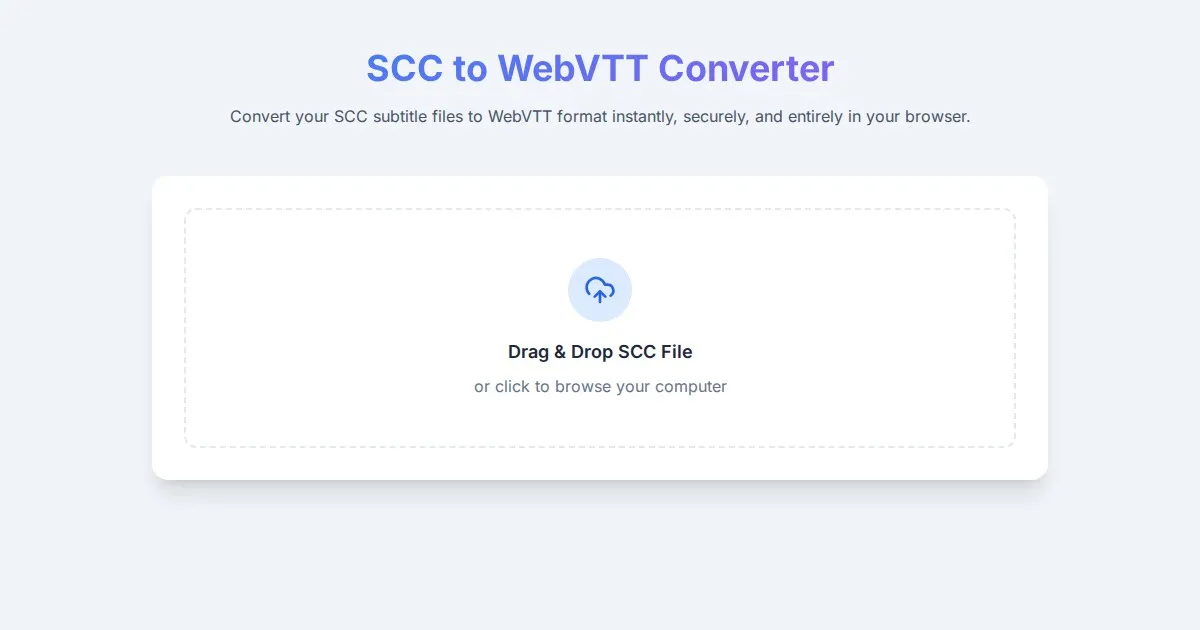
Free SCC to WebVTT Subtitle Converter Tool
Convert SCC subtitle files to WebVTT format online for free. Fast, secure, browser-based SCC to VTT conversion tool for video captioning and accessibility.
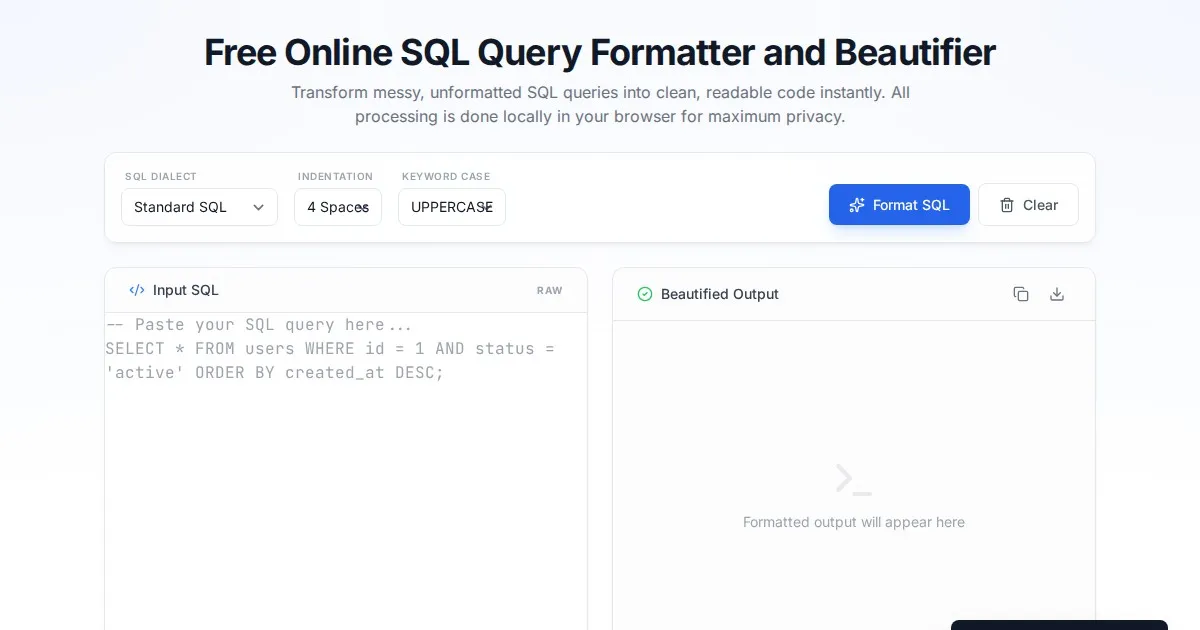
Free Online SQL Query Formatter and Beautifier
Easily beautify, format, and indent your raw SQL code online for free. This clean, efficient SQL formatter supports MySQL, PostgreSQL, and standard SQL syntax.

Free Online Social Media Link Card Previewer
Preview how your website metadata appears when shared on social media. Generate and validate link preview cards for micro-blogging platforms for free.
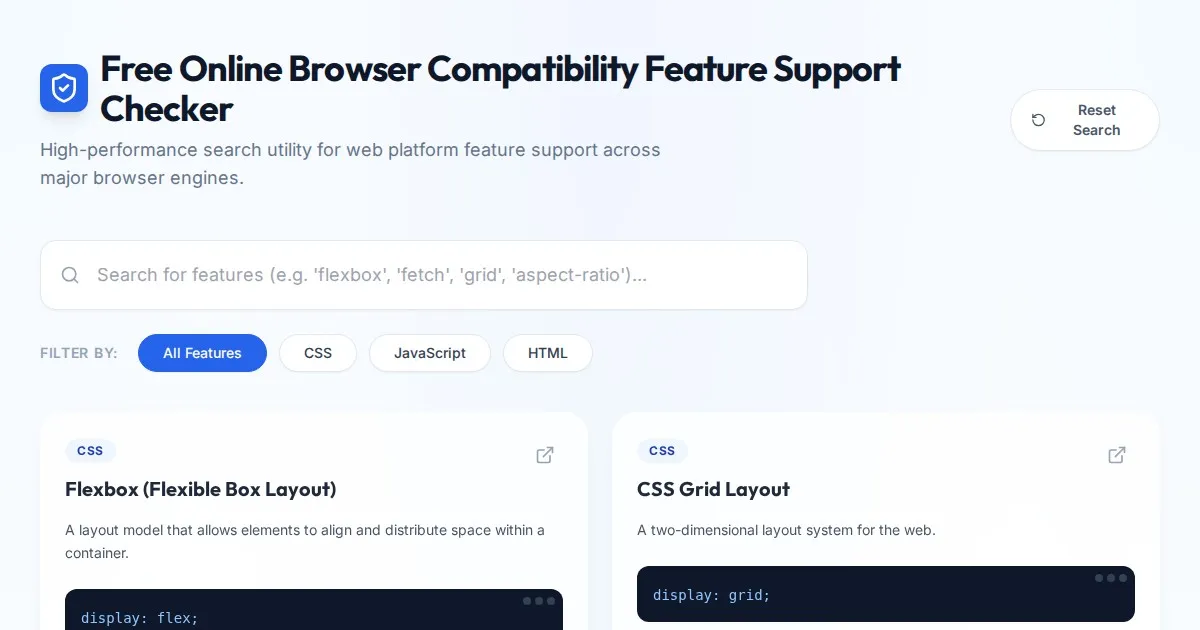
Free Online Browser Compatibility Feature Support Checker
Instantly verify web feature support across Chrome, Firefox, Safari, and Edge. A fast, free browser compatibility checker for modern web development.
Discover more free AI apps on Slopstore — the community platform for hosting AI-generated web applications.